
Why Am I Losing My Hair?

Why Am I Losing My Hair?
The Science Behind Hair Loss

Hair loss. Whether it begins as increased shedding in the shower, a widening part, a gradually receding hairline, or a noticeable decrease in hair density, the experience often raises questions about why this is happening, The answer is rarely as simple as “getting older” or “it’s genetic.” Hair growth is a remarkably biological process influenced by genetics, hormones, immune function, nutrition, aging, and overall health. When one or more of these factors changes, the normal cycle of hair growth can be disrupted, leading to thinning, excessive shedding, or permanent hair loss.

Fortunately, our understanding of hair biology has advanced dramatically over the past two decades. We now know far more about how hair follicle’s function, why different forms of hair loss occur, and how targeted medical and surgical treatments can slow progression, preserve existing hair, and, in many cases, restore the hair that has been lost.

In this article, we’ll explore how healthy hair grows, what happens when that process is disrupted, why every type of hair loss behaves differently, and how modern hair restoration has evolved into a comprehensive field that combines dermatology, medical therapy, and advanced surgical techniques to help patients achieve natural, long-lasting permanent results.

The Follicle

Although each individual hair follicle measures only a few millimeters in length, it represents an extraordinarily sophisticated biological system. Its function depends upon constant communication among hormones, growth factors, immune cells, blood vessels, stem cells, and genetic signaling pathways. When these interactions remain balanced, hair continues to grow normally. When they become disrupted, changes in the hair growth cycle may begin long before thinning becomes visible.

The Hair Growth Cycle

One of the most common misconceptions about hair is that it grows continuously throughout life. In reality, every hair follicle follows a highly regulated biological cycle consisting of distinct phases of growth, transition, rest, and shedding. Rather than functioning independently, each follicle cycles according to its own internal clock, allowing the scalp to maintain a relatively consistent appearance despite the continuous turnover of individual hairs.

Because follicles are at different stages of this cycle at any given time, healthy hair is constantly growing, resting, and shedding. This is why losing some hair every day is not only normal but an essential part of maintaining healthy hair density. In fact, most people shed between 50 and 100 hairs each day, with new hairs simultaneously beginning to grow from those same follicles.
Problems arise when this carefully balanced cycle becomes disrupted. Hair may spend less time growing, remain in its resting phase longer than normal, or fail to produce a healthy replacement hair altogether. Hair doesn’t grow continuously. It moves through the four distinct phases, each playing a different role in keeping your hair healthy and full.

Anagen: The Growth Phase

This is the active growth stage, when hair cells divide rapidly and the hair gets longer. Most of the hair on your scalp, about 85-90% at any given time is in this phase. The growth phase can last anywhere from two to seven years, which is why some people can grow very long hair while others’ hair seems to max out at a certain length.

Catagen: A Short Pause in Growth

After a hair finishes growing, it takes a short 2-3 week “break” called the catagen phase. During this time, the hair follicle shrinks and loses its supply of nutrients, so the hair stops growing. The hair is still securely rooted in place, but it won’t get any longer. The cycle then moves on to the next phase.

Telogen: The Resting Phase

After the short catagen phase the hair enters a longer resting period called the telogen phase. This generally lasts between two to four months. The hair isn’t growing during this time, but it stays in place.

Exogen Phase: The Shedding Phase

At the end of the telogen phase, a new hair starts forming underneath the old one. When that new hair is ready, it pushes the old one , This is the exogen phase. to make way for new growth, restarting the anagen phase.

When the Hair Growth Cycle Becomes Disrupted

Although the hair growth cycle is remarkably efficient, it is also highly sensitive to changes within the body. Genetic factors, hormonal influences, nutritional deficiencies, illness, certain medications, autoimmune diseases, inflammation, and significant physical or emotional stress can all alter the timing and regulation of the hair cycle. Depending on the underlying cause, follicles may enter the resting phase prematurely, produce progressively finer hairs through a process known as miniaturization, or stop producing visible hairs altogether.

These biological changes often begin months before thinning becomes noticeable, which is one of the reasons hair loss can appear to develop gradually. Understanding how and why the growth cycle changes is essential because different conditions disrupt the cycle in different ways and those differences determine which treatments are most likely to be effective.

Did You Know?

Why Hair Loss Happens

Although hair loss may seem sudden, the biological changes responsible for thinning hair usually begin long before they become visible. In many cases, the hair follicle continues to function, but it no longer functions as efficiently as it once did. Rather than producing thick, healthy terminal hairs, it gradually begins producing hairs that are shorter, finer, and less visible. This change does not occur because the follicle simply “stops working.” Instead, it reflects a complex series of biological events that alter the normal balance of cell signaling, hormone activity, immune function, and tissue regeneration within and around the follicle. Healthy hair growth depends on continuous communication between the dermal papilla, stem cells, blood vessels, immune cells, surrounding connective tissue, and numerous signaling pathways. These systems work together to regulate the hair growth cycle, determine how long a hair remains in its active growth phase, and influence the size, thickness, and pigmentation of each new hair shaft. When this communication is disrupted, the cycle begins to change.

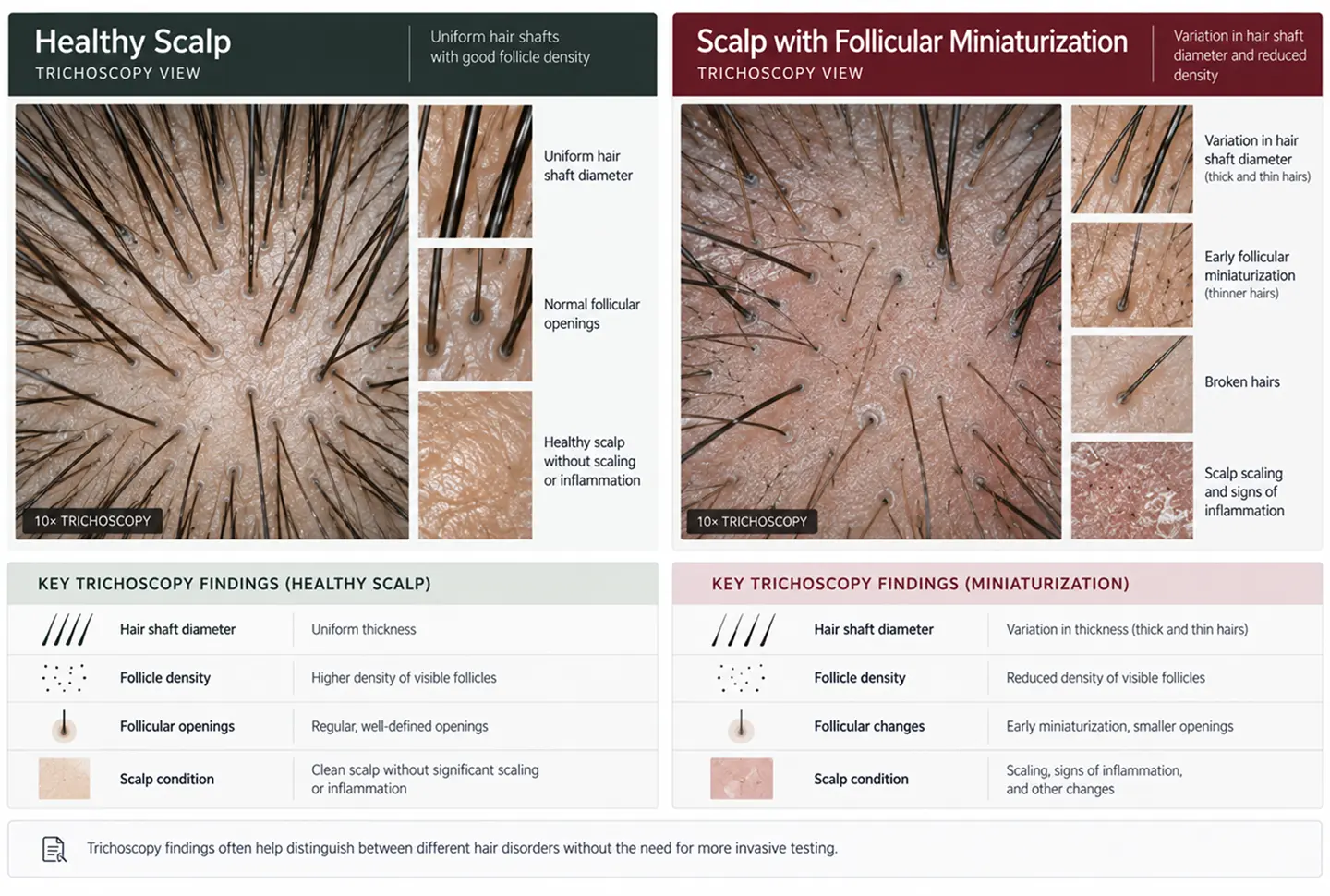
In some individuals, genetic sensitivity to hormones gradually alters follicular activity. In others, inflammation, autoimmune disease, nutritional deficiencies, medications, systemic illness, or significant physiological stress interfere with the follicle’s ability to maintain normal growth. One of the earliest changes is often a shortening of the anagen, or growth, phase. As hairs spend less time actively growing, they have less opportunity to reach their previous length and thickness before entering the resting phase. Over time, the follicle may also become progressively smaller. This process known as follicular miniaturization.

Follicular Miniaturization: A Hallmark of Pattern Hair Loss

Follicular miniaturization is one of the defining characteristics of androgenetic alopecia, the most common cause of hair loss in both men and women.

Rather than disappearing suddenly, affected follicles gradually decrease in size over many years. With each new growth cycle, the follicle produces a hair shaft that is slightly finer, shorter, and less pigmented than the one before it. As this process continues, thick terminal hairs are slowly replaced by fine, wispy hairs that provide progressively less coverage of the scalp. Importantly, the follicle itself often remains alive throughout much of this process. This is why early intervention can be so important. Treatments that slow or interrupt miniaturization may help preserve existing hair before irreversible damage occurs. Miniaturization does not affect every follicle equally. In pattern hair loss, follicles along the frontal hairline, temples, and crown are typically more susceptible, while follicles along the back and sides of the scalp are generally more resistant. This difference in genetic sensitivity forms the basis of modern hair transplantation, where resistant donor follicles are relocated to areas affected by thinning.

The Follicular Environment

The hair follicle does not function in isolation. It exists within a highly specialized follicular microenvironment, where surrounding cells, blood vessels, immune cells, hormones, and molecular signaling pathways continually influence how the follicle functions. Changes within this environment alter normal hair growth in several ways, including reduced cellular signaling that supports hair growth, increased inflammatory activity surrounding the follicle, hormonal influences that shorten the growth cycle, alterations in stem cell activation, nutritional deficiencies that impair rapidly dividing matrix cells and changes associated with aging that reduce regenerative capacity.

Follicular miniaturization is one of the defining characteristics of androgenetic alopecia, the most common cause of hair loss in both men and women.

Hair Loss Is Often Progressive

One of the tricky things about hair loss is that what you see often lags behind what’s actually happening beneath the surface. You might notice your scalp becoming more visible, or your part looking wider, over the course of a few months. But the changes causing that usually started years earlier. Since each hair follicle works on its own timeline, small changes build up gradually often long before they become noticeable. That’s exactly why catching hair loss early matters so much. The sooner it’s identified, the better the chances of preserving the hair you have and slowing or even stopping further loss. So if you’re noticing thinning or more shedding than usual, don’t just chalk it up to “getting older.” It’s worth getting a proper evaluation, since early action gives you the best odds of holding onto your hair.

Although thinning hair is often discussed as though it were a single condition it is actually a symptom that can result from a wide range of processes, each affecting the hair follicle in a different way. Identifying the underlying cause is essential because treatments that are highly effective for one condition may offer little benefit or even be inappropriate for another. Some forms of hair loss develop gradually over many years, while others appear suddenly over the course of weeks. Some primarily affect the hair growth cycle, causing increased shedding, whereas others involve inflammation, immune dysfunction, hormonal influences, or permanent damage to the follicle itself.

The specific combination of these factors varies depending on the underlying cause of hair loss, which is why different conditions require different diagnostic evaluations and treatment strategies.

Some common forms of hair loss

Androgenetic Alopecia (Pattern Hair Loss)

Androgenetic alopecia is the most common cause of hair loss in both men and women. It is a genetically influenced condition in which susceptible hair follicles become progressively more sensitive to the effects of dihydrotestosterone (DHT), a naturally occurring hormone derived from testosterone. Rather than causing hair to fall out suddenly, DHT gradually shortens the anagen phase and promotes follicular miniaturization. Over successive growth cycles affected follicles produce hairs that become progressively finer, shorter, and less pigmented until scalp coverage is noticeably reduced. In men, this often presents as recession of the frontal hairline, thinning at the temples, and hair loss over the crown. Women more commonly experience diffuse thinning over the top of the scalp while usually preserving the frontal hairline. Because androgenetic alopecia is progressive, early diagnosis and treatment are important for preserving existing hair and optimizing long-term outcomes.

Telogen Effluvium

Unlike pattern hair loss, telogen effluvium typically causes widespread shedding rather than progressive miniaturization. This condition occurs when a larger-than-normal number of follicles enter the telogen, or resting, phase simultaneously. Several months later, these hairs are shed together, resulting in noticeable thinning or increased hair loss during washing or brushing.

Common triggers can include major surgery, significant illness, childbirth, rapid weight loss, nutritional deficiencies. certain medications and severe psychological or physical stress. Because the follicles themselves usually remain healthy, hair growth often resumes once the underlying trigger has been identified and addressed.

Alopecia Areata

Alopecia areata is an autoimmune condition in which the body’s immune system mistakenly attacks actively growing hair follicles. It typically presents as smooth, round or oval patches of hair loss that can develop suddenly. In some individuals, the condition remains limited to a few areas of the scalp, while others may experience more extensive involvement affecting the scalp, eyebrows, eyelashes, beard, or body hair. Importantly, if treated early the follicle is usually not permanently destroyed, which means regrowth is often possible with appropriate treatment.

Scarring Alopecia’s

Scarring alopecia’s, also known as cicatricial alopecia’s, represent a group of less common but potentially serious inflammatory disorders. Unlike many other forms of hair loss, these conditions cause inflammation that can permanently damage and replace hair follicles with scar tissue. Once a follicle has been destroyed, it cannot regenerate naturally. Because permanent hair loss may occur if treatment is delayed, early diagnosis and treatment is particularly important. In some cases, a scalp biopsy is necessary to establish the specific diagnosis and guide treatment.

Traction Alopecia

Traction alopecia results from prolonged tension placed on the hair shaft. It is commonly associated with tightly pulled hairstyles, such as braids, ponytails, buns, extensions, or certain cultural and occupational grooming practices. When recognized early, reducing tension on the hair may allow follicles to recover. However, long-standing traction can eventually lead to permanent follicular damage.

Hair Loss Related to Medical Conditions and Hormonal Changes

Hair growth is closely linked to overall health. A variety of medical conditions can alter the normal function of the hair follicle, including thyroid disorders, iron deficiency, vitamin and nutritional deficiencies, polycystic ovary syndrome (PCOS) in women, autoimmune diseases, chronic systemic illness and hormonal changes often associated with pregnancy or menopause.

Medication-Induced Hair Loss

Certain medications including chemotherapy may interfere with the normal hair growth cycle and contribute to increased shedding or thinning. Depending on the medication involved, hair loss may occur by shortening the growth phase, triggering telogen effluvium, or affecting rapidly dividing matrix cells within the follicle. Reviewing current medications is therefore an important part of any comprehensive hair loss evaluation.

Different Causes, Different Treatments

Although many forms of hair loss may appear similar at first glance, the underlying biological mechanisms can be remarkably different. This is why an accurate diagnosis is so important. For example, a treatment designed to slow follicular miniaturization in androgenetic alopecia is unlikely to resolve stress-related telogen effluvium. Likewise, medications used to manage autoimmune hair loss differ significantly from those used to treat inflammatory scarring alopecia’s. Rather than applying a one-size-fits-all approach, effective hair restoration begins with identifying the specific condition. Once the underlying diagnosis is understood, treatment can be tailored to the individual patient, improving both the likelihood of success and the long-term preservation of healthy hair.

The Importance of an Accurate Diagnosis

Although hair loss is a common concern, determining why it is occurring is often far more complex than it first appears. Similar patterns of thinning can result from very different underlying conditions, and even experienced clinicians cannot accurately diagnose every form of hair loss based on appearance alone. For this reason, one of the most important steps in developing an effective treatment plan is establishing an accurate diagnosis. Rather than focusing solely on the visible hair loss, dermatologists evaluate the health of the scalp, the characteristics of the hair follicles, the patient’s medical history, and other factors that may be contributing to changes in hair growth. This comprehensive approach helps distinguish between temporary shedding, progressive genetic hair loss, inflammatory disorders, nutritional deficiencies, autoimmune disease, and other medical conditions that may require very different treatment strategies.

A Comprehensive Medical History

The diagnostic process often begins with a detailed discussion about when the hair loss started and how it has changed over time. These details provide important clues that often narrow the list of possible causes.

Questions may include:

Trichoscopy: Beyond the Naked Eye

One of the most valuable tools in modern hair loss evaluation is trichoscopy, also known as scalp dermoscopy. This tool allows the doctor to examine the scalp and hair follicles in far greater detail than is possible with the naked eye. Trichoscopy findings often help distinguish between different hair disorders without the need for more invasive testing. Trichoscopy may reveal subtle findings such as the following:

Questions may include:

Laboratory Testing

Because hair growth reflects overall health, laboratory testing may be recommended when an underlying medical condition is suspected. Depending on the individual’s history and examination, testing may evaluate factors such as the following:
Correcting these underlying abnormalities is often an essential part of successful treatment.

Scalp Biopsy

In certain situations, particularly when inflammation or scarring alopecia is suspected, a scalp biopsy may be recommended. This minor in-office procedure involves removing a very small sample of scalp tissue under local anesthesia for microscopic examination by a dermatopathologist. Although not required for every patient, a biopsy can provide critical information when the diagnosis remains uncertain or when distinguishing between different inflammatory hair disorders.

Monitoring Hair Loss Over Time

Hair loss is often a dynamic process rather than a single event. Comparing the scalp over time can reveal subtle changes that may not be apparent during a single office visit. Clinical photography, serial examinations, and, when appropriate, repeat trichoscopic evaluation allow the physician to monitor your progress and assess how well treatment is working. This ongoing evaluation helps ensure that treatment plans can be adjusted as the patient’s condition changes.

Why Diagnosis Comes Before Treatment

One of the most common misconceptions about hair restoration is that there is a single treatment that works for everyone. In reality, successful treatment depends on identifying the underlying cause of hair loss before therapy begins.

For example, medications that help slow the progression of androgenetic alopecia are unlikely to be effective for stress-related telogen effluvium. Likewise, inflammatory scarring alopecia’s often require prompt medical treatment to protect the remaining follicles, while some nutritional or hormonal causes of hair loss improve only after the underlying deficiency or imbalance has been corrected. An accurate diagnosis allows treatment to be tailored to the individual rather than the symptom alone. It also helps establish realistic expectations, identify conditions that require ongoing monitoring, and ensure that patients receive the most appropriate combination of medical, regenerative, or surgical therapies.


Modern Hair Restoration: A Personalized Approach to Treatment

Over the past two decades, the field of hair restoration has advanced considerably. Our understanding of hair follicle biology, the mechanisms that drive different forms of hair loss, and the development of new medical and surgical therapies have transformed the way hair loss is managed. Today, hair restoration is no longer viewed as a single treatment or procedure. Instead, it is a personalized process that begins with an accurate diagnosis and a thorough understanding of the underlying cause of hair loss. Treatment recommendations are then tailored to the individual patient’s condition, stage of hair loss, overall health, and long-term goals. For many patients, the most successful outcomes are achieved by combining multiple treatment approaches rather than relying on a single therapy.

Medical Therapies

Medical treatment is often the first line of therapy for many common forms of hair loss, particularly androgenetic alopecia. Depending on the diagnosis and the individual patient, treatment may include topical or oral medications that help slow follicular miniaturization, prolong the growth phase of the hair cycle, or stimulate new hair growth. In situations where nutritional deficiencies, hormonal imbalances, thyroid disorders, or other medical conditions are contributing to hair loss, treating the underlying cause is often just as important as addressing the hair itself. Medical therapy also plays an important role in preserving existing hair and may help reduce the need for more invasive procedures in the future.

Regenerative Therapies

Advances in regenerative medicine have expanded the range of non-surgical options available for carefully selected patients. Treatments such as platelet-rich plasma (PRP), microneedling, and low-level laser therapy (LLLT) are designed to support the health of existing hair follicles by creating an environment that encourages healthier hair growth. Depending on the patient’s diagnosis, these therapies may be used alone or in combination with medical treatment as part of a comprehensive hair restoration plan. Although research continues to evolve, regenerative therapies have become valuable tools for many patients seeking to preserve or improve hair density without surgery.

Hair Transplantation

For patients with permanent hair loss, hair transplantation remains the most effective method of restoring hair to areas where follicles have been permanently lost. Modern hair transplantation is based on a simple but powerful biological principle: follicles taken from the donor region located at the lower back and sides of the scalp retain their genetic resistance to pattern hair loss when transplanted to thinning or bald areas. These follicles continue to grow naturally in their new location, producing permanent hair that can be washed, cut, and styled like the surrounding hair. Today’s advanced techniques, including Follicular Unit Extraction (FUE) and Follicular Unit Transplantation (FUT), allow surgeons to transplant naturally occurring follicular units with exceptional precision. The results are meticulously designed to be natural, age-appropriate, and harmonious with the patient’s facial features. Importantly, hair transplantation is not appropriate for every patient. The best candidates are those with a stable donor supply, realistic expectations, and a diagnosis that is suitable for surgical restoration.

Combination Therapy

One of the most important advances in modern hair restoration is the recognition that hair loss often benefits from a multimodal approach. For example, a patient may use medical therapy to slow the progression of androgenetic alopecia while undergoing PRP treatments to support follicular health. If hair loss has already become permanent in certain areas, hair transplantation may then restore density while medical therapy continues to preserve existing native hair. Rather than viewing these treatments as competing options, often combining them creates an individualized treatment plans that maximize both short-term improvement and long-term hair preservation.

Hair Restoration Begins with Understanding Why You're Losing Your Hair

Hair loss is rarely explained by one simple answer. It reflects changes within the biology of the hair follicle that may be influenced by genetics, hormones, immune function, nutrition, inflammation, aging, medical conditions, or a combination of these factors. Because each form of hair loss affects the follicle differently, successful treatment begins with an accurate diagnosis. Identifying the underlying cause allows treatment to be directed at the biological process responsible for the hair loss rather than simply addressing its visible effects.

Conclusion

Modern hair restoration offers more options than ever before from medical therapies and regenerative treatments to advanced hair transplantation, but no single approach is right for every patient. The most effective treatment plans are individualized, evidence-based, and designed to preserve healthy hair while restoring what has been lost whenever possible. Whether you have recently noticed increased shedding, gradual thinning, or long-standing hair loss, understanding the science behind what is happening is the first step toward making informed decisions about your care. Advances in dermatology and hair restoration continue to evolve giving patients more opportunities than ever to protect, preserve, and restore their hair. Hair loss is a journey of discovery as much as it is a journey of treatment. Understanding why your hair is changing is the foundation of every successful hair restoration plan.

Hair Loss & Transplant Education

Ready to Find Out What's Possible?

A private consultation with Dr. Rose is the first step — no obligation, no pressure, just an honest plan.