A Regenerative Approach to Supporting Hair Growth
Platelet-rich plasma, commonly known as PRP, is a non-surgical treatment that uses a concentrated portion of your own blood to support the health and activity of existing hair follicles. Platelets are best known for their role in clotting, but they also contain growth factors and signaling proteins involved in tissue repair and cellular communication. When platelet-rich plasma is carefully injected into areas of thinning hair, these naturally occurring substances may help create a more supportive environment around follicles that are still present but producing progressively finer hair. PRP does not create new follicles and cannot restore hair in every form of hair loss. Its effectiveness depends on the diagnosis, the condition of the follicles, and the individual patient. A thorough medical evaluation is therefore an essential first step.
What Is PRP?
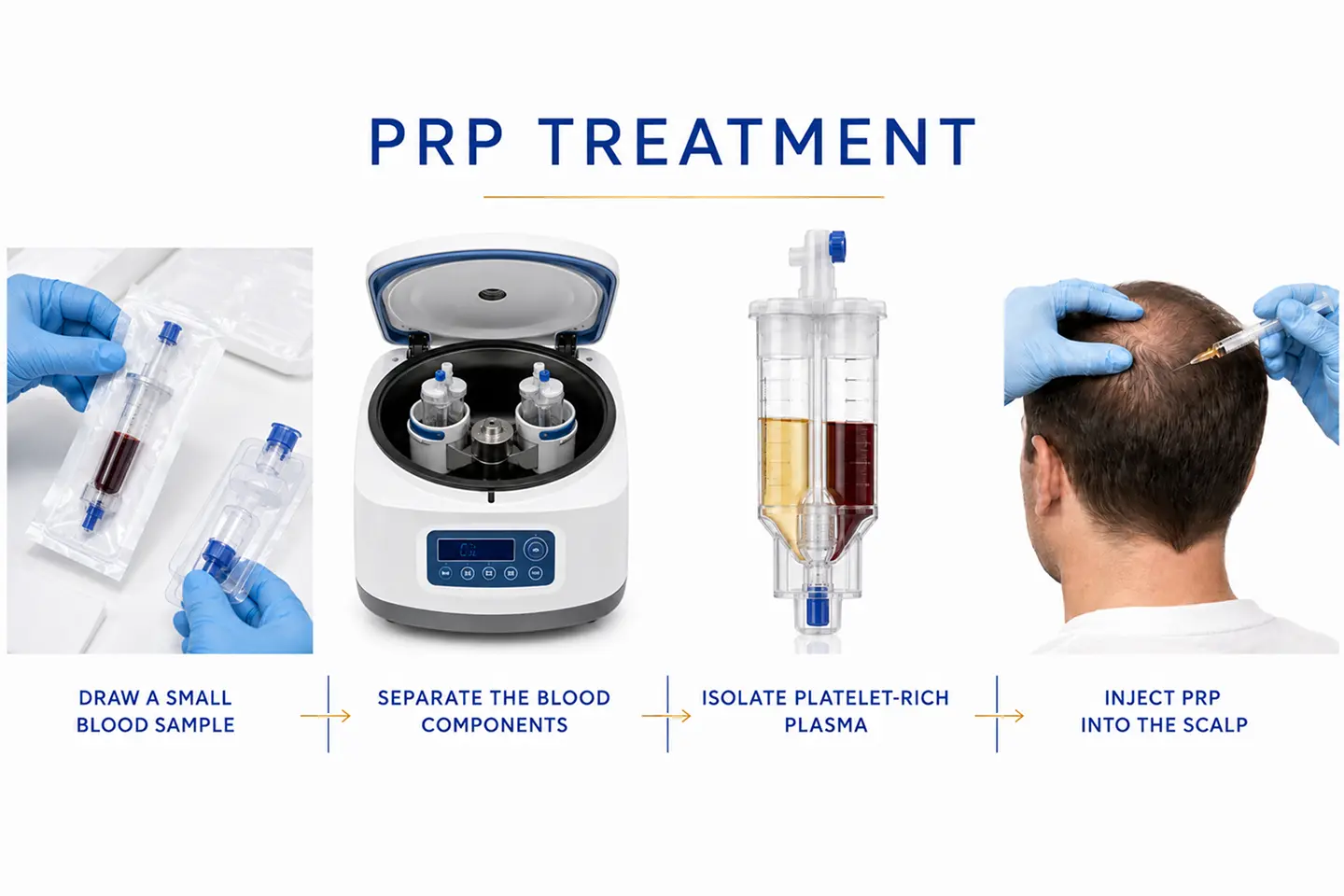
PRP is prepared from a small sample of your own blood. The blood is placed into a centrifuge, which separates it into its different components and allows the platelet-rich portion of the plasma to be isolated. This concentrated plasma is then administered into carefully selected areas of the scalp. Because PRP is obtained from the patient’s own blood, it is an autologous treatment and does not contain factors foreign to you to cause a reaction. The procedure is performed in the office and generally involves little interruption to normal activities. PRP is intended to support follicles that remain alive and capable of producing hair. Depending on the diagnosis and the patient’s response, treatment may help reduce excessive shedding, support weakened or miniaturized follicles, improve the appearance of hair density, promote thicker, stronger looking hair., help preserve existing hair, complement an established medical hair loss program and support the recovery and follicular growth following a hair transplant. PRP is generally most useful when thinning is identified before follicles have become severely miniaturized or inactive.
What Types of Hair Loss May Be Treated With PRP?
PRP is most commonly used for androgenetic alopecia, also known as male or female pattern hair loss. Patients experiencing early or moderate thinning may be particularly appropriate candidates when active follicles remain within the affected area. PRP may also be considered as an adjunctive therapy in certain other hair-loss conditions or as part of a hair-transplant treatment plan. However, not every form of hair loss should be treated in the same way.
PRP and Hair Transplantation
PRP may be incorporated into a broader hair-restoration strategy before, during, or after hair transplantation when medically appropriate. Hair transplantation and PRP serve different purposes. A transplant moves permanent follicles into areas where hair has been lost. PRP is intended to support existing or newly transplanted follicles and the surrounding scalp environment. For some patients, combining surgical restoration with ongoing medical or regenerative therapy helps address both transplanted hair and vulnerable non-transplanted hair.
What Happens During a PRP Treatment?
A typical appointment involves several steps:
- A small amount of blood is drawn from the patient’s arm.
- The blood is processed in a centrifuge to separate and concentrate the platelet-rich plasma.
- The scalp is prepared for treatment.
- PRP is administered through a series of precise injections into the areas selected for treatment.
The procedure is usually completed during a single office visit. Patients may experience temporary tenderness, redness, pinpoint bleeding, swelling, or a sensation of tightness in the treated area. These effects are generally very mild and short-lived.
How Many Treatments Are Needed?
PRP is usually performed as a series rather than as a single treatment. An initial course may be followed by periodic maintenance sessions, depending on the diagnosis, response, and long-term treatment objectives. Hair grows slowly, so results are not immediate. Some patients first notice reduced shedding, followed by gradual improvement in the strength or appearance of their hair. Progress is generally evaluated over several months through clinical examination and, when appropriate, standardized photographs or measurements.
Who Is a Good Candidate?
PRP may be appropriate for Those who have early or moderate pattern hair loss., are experiencing progressive thinning rather than complete baldness., still have active miniaturizing follicles within the treatment area., prefer a non-surgical treatment option to restore their hair., want to support existing hair. And are seeking an adjunct to medical treatment. It is also ideal for those preparing for or recovering from a hair transplant.
Why Diagnosis Comes First
At Golden State Hair Transplant, the first priority is to determine why the hair is thinning and whether the affected follicles remain capable of responding. PRP may then be recommended on its own or as part of a broader plan that includes prescription therapy, topical treatment, selected adjunctive therapies, or hair transplantation. PRP can be a valuable option for appropriately selected patients.