FUT Hair Transplantation remains the gold standard in hair transplantation for good reason. In the evolving field of hair restoration, newer technologies and surgical techniques frequently receive the most attention. Follicular Unit Excision (FUE) has become increasingly popular, leading some patients to believe that Follicular Unit Transplantation (FUT), commonly referred to as the strip method, is outdated. However, this perception overlooks the significant advantages FUT continues to offer. For certain patients, particularly those requiring larger numbers of grafts, FUT remains one of the most efficient, reliable, and cost-effective methods of surgical hair restoration.
At Golden State Hair Transplant Clinic, We offer both FUT and FUE but we believe that selecting the appropriate surgical technique should be based on the individual patient’s hair loss pattern, donor hair availability, long-term goals, scalp condition and medical considerations. Both procedures offer their own unique set of benefits and there are instances where one procedure may be recommended over the other due to your individual circumstances. There are also circumstances where it is beneficial to implement a combination of both FUE and FUT methods.
What Is FUT Hair Transplantation?
Follicular Unit Transplantation is a well-established surgical technique in which a narrow strip of hair-bearing tissue is carefully removed from the donor area, typically located at the back of the scalp. The donor area is then closed using surgical sutures or staples, leaving a linear scar that can generally be concealed by the surrounding hair. The harvested tissue is meticulously dissected under magnification into individual follicular units. Each unit naturally contains approximately one to four hairs, which are then transplanted into areas experiencing hair loss. This precise method of graft preparation allows the surgical team to preserve the natural structure of the follicular units while preparing them for implantation.
FUT has been practiced for decades and this technique remains highly relevant in modern hair restoration.
The Myth: FUT Is an Outdated Procedure
One of the most common misconceptions surrounding hair transplantation is that FUT has been replaced by FUE. While FUE offers important advantages, particularly for patients who prefer very short hairstyles or wish to avoid a linear donor scar, it is not necessarily the superior procedure. Both techniques transplant naturally occurring follicular units. The primary difference lies in how those grafts are harvested from the donor area.
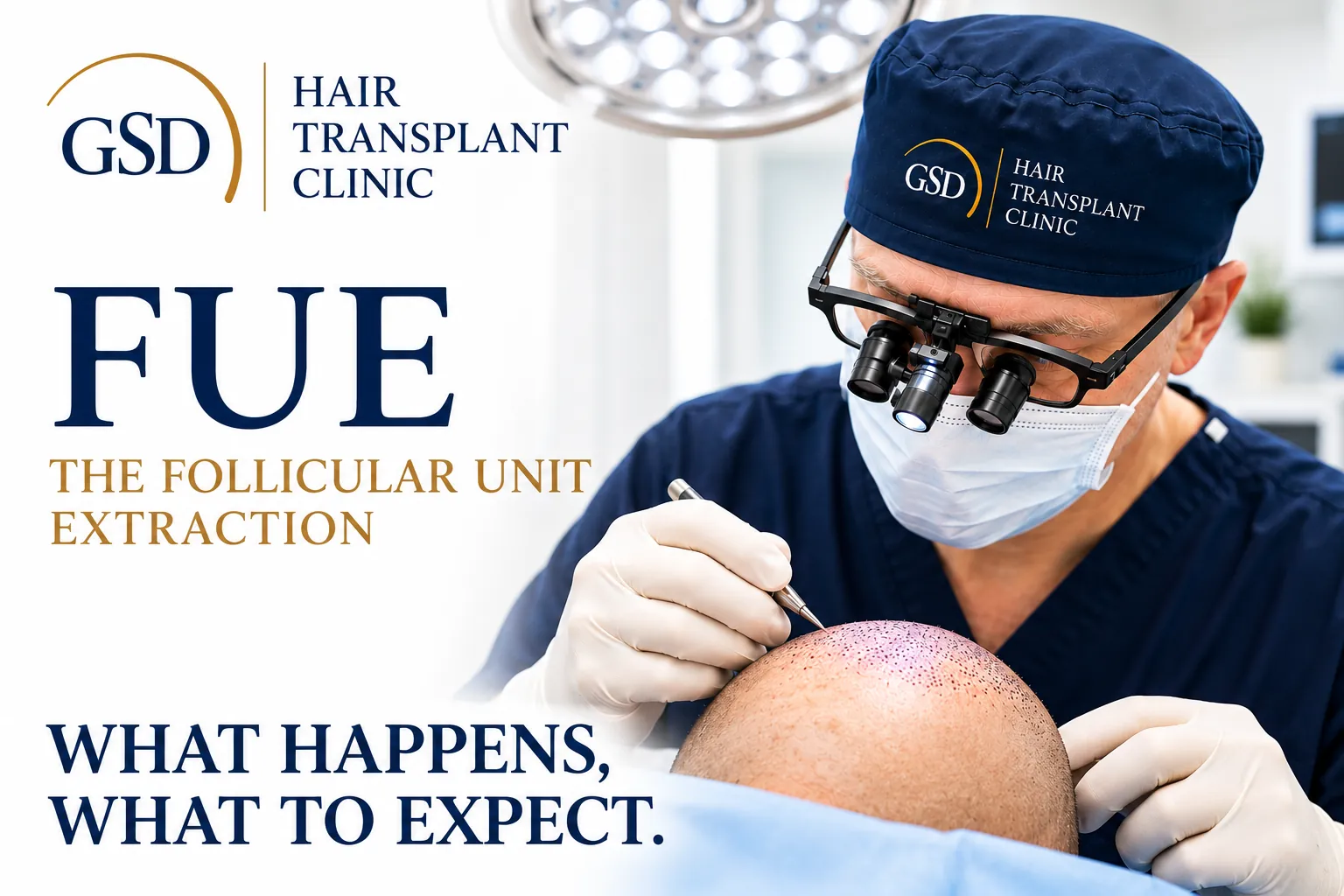
FUE removes follicular units individually using small circular punches. FUT removes a strip of donor tissue that is subsequently divided into individual grafts under microscopic visualization. The International Society of Hair Restoration Surgery continues to recognize both approaches as established surgical methods. The question is whether it offers meaningful advantages for the patient’s particular circumstances.
The Significant Benefits of FUT
The Ability to Obtain a Larger Number of Grafts
One of FUT’s most important advantages is its ability to provide a substantial number of follicular unit grafts during a single surgical session. For patients with extensive hair loss, obtaining sufficient donor hair is essential to achieving meaningful cosmetic improvement. FUT allows the surgeon to harvest a concentrated area of hair-bearing tissue, which can then be carefully dissected into individual follicular units.
Depending on the patient’s donor density, scalp characteristics, and available donor supply, this approach may allow a larger number of grafts to be harvested efficiently. For patients with advanced androgenetic alopecia, including those requiring significant frontal and crown coverage, this can be particularly valuable. FUT may also play an important role in maximizing the total number of grafts available over a patient’s lifetime.
read all about Megasession Hair Transplants
A More Cost-Effective Hair Transplant Option
Cost is an important consideration for many patients seeking surgical hair restoration. FUT is frequently less expensive than FUE, particularly when a substantial number of grafts are required. Because FUT involves harvesting a strip of tissue rather than individually extracting hundreds or thousands of follicular units, the donor harvesting process can be more efficient. This efficiency may translate into lower procedural costs, depending on the complexity of the surgery. For patients who require extensive restoration, FUT can provide an excellent balance of surgical quality, graft availability, and affordability.
A More Time-Efficient Surgical Procedure
Another important advantage of FUT is the efficiency of donor harvesting. During FUE, each follicular unit must be individually identified, isolated, and extracted from the scalp. When thousands of grafts are required, this can be a time-consuming process. With FUT, a strip of donor tissue is removed in a single surgical stage and then divided into follicular units by trained surgical personnel working under magnification. This allows graft preparation to proceed efficiently while other stages of the procedure are being performed. Although total surgical time depends on the number of grafts, the surgical team, and the complexity of the case, FUT can offer meaningful time savings, particularly in larger sessions.
A Linear Scar That Can Be Easily Concealed
Perhaps the greatest concern patients express about FUT is the resulting linear scar. While FUT does produce a thin linear scar, modern surgical closure techniques can often create a fine line that is minimally noticeable when covered by surrounding hair. For patients who maintain moderate or longer hair at the back of the scalp, the scar may be effectively concealed during everyday activities.
Techniques such as trichophytic closure, when appropriate, may further improve the cosmetic appearance of the donor incision by allowing hair to grow through or across portions of the scar. It is important to recognize that no surgical hair transplant procedure is entirely scar-free. FUE produces numerous small circular scars distributed throughout the donor area. The difference is not the presence or absence of scarring, but the pattern and visibility of those scars.
For patients who do not routinely shave their heads or wear extremely short hairstyles, FUT’s linear scar may be a reasonable trade-off for the benefits it provides. Scar appearance varies with individual healing, scalp tension, surgical technique, and other factors.
Preserving Valuable Donor Hair for the Future
Hair transplantation requires careful long-term planning because donor hair is a finite resource. Once a follicular unit is removed from the donor area, it cannot be replaced naturally. FUT allows grafts to be harvested from a carefully selected portion of the permanent donor zone while preserving surrounding areas for possible future procedures. This can be particularly beneficial for younger patients with progressive hair loss or individuals who may eventually require additional restoration.
In appropriately selected patients, FUT followed by FUE or a carefully planned combination of the two techniques may help maximize the lifetime donor supply. An experienced surgeon considers not only the immediate cosmetic result but also the patient’s potential hair loss progression over the coming decades.
Precise Graft Preparation Under Microscopic Visualization
An additional advantage of FUT is the ability to dissect follicular units from donor tissue under high-powered stereomicroscopes. This process allows trained technicians to identify and carefully separate natural follicular groupings while preserving the surrounding structures. Meticulous dissection can help minimize damage to follicles and produce well-prepared grafts for transplantation. Graft quality is an essential component of successful hair restoration, regardless of whether FUT or FUE is selected.
The experience of the surgeon and surgical team, proper graft handling, and careful placement are all critical factors in achieving natural-looking results.
Who May Be an Ideal Candidate for FUT?
FUT may be especially appropriate for patients who have extensive hair loss requiring a large number of grafts, maintain sufficient hair length to conceal a linear scar, have good donor density and scalp flexibility, or wish to maximize their available donor hair for future procedures. It may also appeal to patients seeking a more economical approach to larger hair transplant sessions.
For some women, FUT offers the additional benefit of avoiding the donor-area shaving sometimes required with FUE. However, FUT is not suitable for everyone. Patients who prefer closely shaved hairstyles, have limited scalp flexibility, or are predisposed to problematic scarring may benefit more from alternative techniques. A comprehensive surgical consultation is essential to determine the most appropriate approach.
FUT and FUE: Two Techniques That Complement Each Other
Rather than viewing FUT and FUE as competing procedures, experienced hair restoration surgeons recognize that both techniques have distinct advantages. FUE provides flexibility in donor harvesting and avoids a continuous linear scar. FUT offers efficient harvesting, excellent microscopic graft preparation, and the potential to obtain substantial numbers of grafts from a concentrated donor region. In certain circumstances, combining FUT and FUE may offer additional opportunities to optimize donor utilization. The objective is not to promote one technique at the expense of another, but to select the method or combination of methods that best serves the patient’s immediate and long-term needs.
The Importance of Having an Experienced Hair Transplant Surgeon
Successful hair transplantation involves far more than simply moving hair follicles from one location to another. It requires an understanding of donor hair characteristics, progressive hair loss, scalp anatomy, graft survival, hairline design, and the natural direction and distribution of hair growth.
At Golden State Hair Transplant Clinic, Dr. Paul T. Rose, brings more than three decades of experience in hair restoration surgery. His extensive background includes advanced follicular unit transplantation, large-session hair restoration, and pioneering contributions to surgical techniques designed to improve natural-looking outcomes. Dr. Rose is recognized as one of the pioneers of modern trichophytic closure techniques and is credited with inventing the Ledge Closure technique, an important advancement in minimizing the visibility of linear donor scars following FUT surgery.
By carefully preparing the wound edges during closure, this technique encourages hair to grow through the resulting scar, helping to camouflage the incision and improve its cosmetic appearance. His contributions to donor-area closure have been documented in professional surgical publications and medical textbooks, and his techniques have been presented to hair restoration surgeons internationally.
Dr. Rose’s expertise also extends to hair transplantation into scar tissue, including selected cases involving previous surgical procedures, traumatic injuries, and scarring alopecia. These challenging procedures require specialized knowledge of tissue characteristics, vascular supply, and graft survival. His extensive experience with FUT, FUE, advanced donor closure techniques, and reconstructive hair restoration allows him to develop individualized treatment plans based on each patient’s surgical needs, donor hair availability, and long-term restoration goals.
At Golden State Hair Transplant Clinic, this combination of surgical innovation, technical expertise, and long-term planning is central to providing natural-looking hair restoration results.
Conclusion: FUT Remains a Valuable Standard in Hair Restoration
The increasing popularity of FUE has changed the landscape of hair transplantation, but it has not eliminated the important role of FUT. For appropriately selected patients, FUT continues to offer substantial benefits, including efficient harvesting of large numbers of grafts, potentially lower costs, shorter donor harvesting times, meticulous microscopic graft preparation, and the opportunity to preserve donor resources for future procedures. Although FUT leaves a linear scar, careful surgical technique and appropriate hairstyle choices can often make that scar minimally noticeable.
The most advanced approach to hair restoration is not necessarily the newest procedure. It is the one that makes the best use of a patient’s available donor hair while supporting natural, lasting results.
At Golden State Hair Transplant Clinic, our approach emphasizes individualized surgical planning, established techniques, and a lifetime perspective on hair restoration. Talk to us today about your hair loss and discover why FUT hair transplantation remains a proven option, offering more grafts, lower costs, efficient surgery, and natural-looking results