The hairline is one of the most influential features in how the face is perceived. Its height, shape, and contour help define facial proportions and can subtly influence whether facial characteristics are viewed as more masculine or more feminine. For transgender women and others seeking a more feminine appearance, hairline feminization through hair transplantation can be an important part of a personalized gender-affirming treatment plan. Unlike traditional hair restoration, which is primarily focused on replacing hair lost through androgenetic alopecia, hairline feminization is a highly individualized procedure that combines surgical precision with artistic design. The objective is not simply to move the hairline lower, but to create a natural-looking frame for the face that complements each patient’s unique anatomy, aesthetic goals, and overall facial harmony.
Modern follicular unit extraction (FUE) techniques allow experienced hair restoration surgeons to reshape the frontal hairline, soften temple recession, and increase density in strategic areas with remarkable precision. When carefully planned, these refinements can create subtle yet meaningful changes that contribute to a softer, more feminine appearance while preserving a natural result. Whether performed as a stand-alone procedure or in combination with other gender-affirming treatments, hairline feminization has become an increasingly important component of comprehensive transgender healthcare. Understanding how the procedure is planned, performed, and customized can help patients make informed decisions as they pursue care that reflects both their identity and their long-term goals.
Why the Hairline Plays Such an Important Role in Facial Feminization
When people think about facial gender differences, they often focus on features such as the nose, jawline, or brow. While these characteristics certainly contribute to facial appearance, the hairline is often one of the first features the eye recognizes. It frames the upper face, influences the perceived size of the forehead, and helps establish facial balance before attention shifts to any other feature. One of the defining characteristics of a traditionally masculine hairline is recession at the temples. This creates a broader forehead and the familiar M-shaped contour that commonly develops with male-pattern hair loss. Even in individuals who have not experienced significant hair loss, a naturally higher or more angular hairline may contribute to a more masculine appearance.
In contrast, feminine hairlines generally have a softer, more rounded contour with less pronounced temporal recession. The transition from the temples to the central forehead is more gradual, creating a gentle frame that complements the eyes, brows, and upper face. These differences may appear subtle, but they have a significant influence on overall facial harmony. Hairline feminization is designed to recreate these characteristics while respecting each patient’s unique facial proportions. Rather than applying a standard template, Dr Rose carefully evaluates forehead dimensions, facial symmetry, hair density, hair texture, and anticipated long-term hair stability before developing a customized treatment plan. The objective is not to create the lowest possible hairline. Instead, successful hairline feminization achieves balance. A thoughtfully designed hairline should appear as though it has always belonged to the individual, enhancing feminine facial characteristics without appearing artificial or surgically altered.
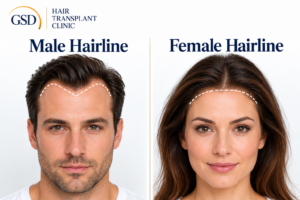
What Defines a Feminine Hairline?
While every person’s facial anatomy is unique, there are several characteristics that are commonly associated with a feminine hairline. These features work together to create softer facial proportions and a more balanced frame for the upper face. The goal of hairline feminization is not to duplicate a single idealized shape, but rather to design a hairline that complements each individual’s facial structure while achieving a natural, feminine appearance. One of the most recognizable differences between masculine and feminine hairlines is the contour. Hairlines typically associated with men often develop greater recession at the temples, creating a broader forehead and a more angular or “M-shaped” appearance. In contrast, feminine hairlines generally feature smoother curves with less pronounced temporal recession, producing a softer transition across the forehead.
Hairline height also plays an important role. Although many women naturally have higher foreheads, a hairline that sits too high can accentuate masculine facial proportions. During the consultation process, Dr Rose carefully evaluates your forehead dimensions, facial symmetry, brow position, and overall facial balance before determining whether lowering the hairline is appropriate. The objective is not simply to position the hairline lower, but to create harmonious proportions that appear entirely natural. Equally important is the way the hairline transitions into the surrounding hair. Nature rarely creates perfectly straight lines or uniform density. Instead, natural hairlines contain subtle irregularities, delicate feathering, and slight variations in hair direction. These seemingly minor details are critical to achieving realistic results. During hairline feminization, individual follicular units, often containing a single hair are strategically placed to recreate these natural characteristics and avoid an artificial appearance.
The temporal regions also receive careful attention. Restoring fullness to the temples helps soften the upper face and creates a gentle frame around the eyes. When combined with a thoughtfully designed frontal hairline, these refinements can significantly enhance facial harmony without dramatically altering a person’s appearance. Ultimately, successful hairline feminization is an exercise in balance rather than symmetry alone. The most beautiful results are those that complement the patient’s unique facial features, ethnicity, hair characteristics, and long-term aesthetic goals. Rather than drawing attention to the procedure itself, a well-designed hairline simply appears as though it has always belonged there.
Hairline Feminization Is More Than Lowering the Hairline
One of the most common misconceptions about hairline feminization is that it simply involves lowering the hairline. In reality, creating a convincingly feminine appearance requires a far more comprehensive approach. Every decision from the position of the central hairline to the curvature of the temples and the density of individual grafts contributes to the final result. The artistic component of hairline feminization cannot be overstated. A hairline that is positioned too low, too straight, or too dense can appear unnatural and may not complement the patient’s facial anatomy. Conversely, a carefully designed hairline that incorporates subtle asymmetry, gradual density transitions, and natural irregularities can dramatically soften facial features while maintaining authenticity.
For this reason, successful hairline feminization requires far more than technical surgical skill. It demands an understanding of facial aesthetics, long-term planning, and the ability to create results that look effortless rather than surgically created.
The Consultation: Designing a Hairline That Complements the Individual
Hairline feminization is one of the most personalized procedures in hair restoration. No two patients share the same facial proportions, hair characteristics, or aesthetic goals, which is why careful planning is the foundation of achieving a natural-looking result.
During the initial consultation, your evaluation extends well beyond the hairline itself. Facial proportions, forehead height, brow position, temple contour, hair density, donor hair availability, and the natural direction and texture of the hair are all carefully assessed. These elements work together to determine what hairline shape will best complement your unique facial anatomy. For transgender women, understanding where they are in their transition is also an important part of treatment planning. Some patients have been receiving hormone therapy for several years, while others may be early in their transition or have not yet begun hormone treatment. These factors can influence hair characteristics, the stability of existing hair, and the overall timing of surgical intervention.
Equally important is understanding each patient’s personal goals. Some individuals wish to achieve a subtle softening of the upper face, while others are seeking a more dramatic transformation as part of a broader facial feminization plan. Taking the time to understand your expectations allow us to develop a customized treatment strategy rather than applying a standardized approach. Open communication during the consultation is essential. Reviewing photographs, discussing hairstyle preferences, evaluating long-term goals, and explaining what can realistically be achieved all help ensure that the final hairline is designed to meet your expectations while maintaining a natural appearance. Because hair transplantation produces permanent results, thoughtful planning is every bit as important as the procedure itself.
Is Hormone Therapy Enough to Create a Feminine Hairline?
Hormone replacement therapy (HRT) is a cornerstone of gender-affirming care for many transgender women and often produces meaningful changes in skin quality, body composition, and overall appearance. It can also play an important role in slowing or stabilizing androgen-related hair loss. For individuals experiencing male pattern hair loss, medications that suppress testosterone combined with estrogen therapy when appropriate may reduce ongoing follicular miniaturization and, in some cases, improve hair thickness. However, it is important to understand the limitations of hormone therapy when it comes to hairline feminization. Once hair follicles have been permanently lost, hormone therapy alone cannot recreate a new hairline or restore significant temple recession. Likewise, hormones cannot fundamentally change the shape of a naturally masculine hairline. While existing hairs may become healthier and fuller, the overall architecture of the frontal hairline generally remains unchanged. This is where hair transplantation can play a transformative role. By strategically transplanting healthy follicular units into carefully selected areas, can reshape the frontal hairline, soften temporal recession, and create a more feminine facial frame while preserving a natural appearance. For many patients, the most effective treatment combines both approaches. Hormone therapy helps protect and optimize existing hair, while hair transplantation addresses the structural changes needed to create a feminine hairline. Working together, these treatments can provide results that neither could achieve alone. The timing of surgery should always be individualized. In many cases, surgeons recommend allowing hormone therapy sufficient time to stabilize before designing the final hairline. This provides a clearer understanding of the patient’s long-term hair characteristics and helps ensure the surgical plan is tailored for lasting results.
FUE Hair Transplantation: Precision Meets Artistry
Follicular Unit Extraction (FUE) has become the preferred hair transplantation technique for many patients’ seeking hairline feminization because it offers exceptional precision while minimizing visible scarring. Individual follicular units are carefully harvested from the donor area typically the back and sides of the scalp, where hair is genetically resistant to ongoing hair loss and transplanted one by one into the newly designed hairline. While the technical aspects of FUE are important, successful hairline feminization depends just as much on artistic judgment as it does on surgical skill. Every graft must be placed at the correct angle, direction, depth, and density to replicate the way hair naturally grows along the front of the scalp. Even slight variations in these details can influence whether the final result appears soft and natural or noticeably artificial.
The leading edge of a feminine hairline is particularly delicate. Rather than creating a perfectly straight border, experienced surgeons use individual follicular units to produce subtle irregularities that mimic natural hair growth. Density is gradually increased behind this transition zone, creating the appearance of hair that has always grown in that location. Unlike temporary cosmetic solutions, transplanted follicles continue to grow naturally. Once the transplanted hairs complete their normal growth cycle, they can be washed, cut, colored, and styled just like the patient’s existing hair. Because the donor follicles are typically resistant to androgen-related hair loss, the results are considered permanent. Modern FUE has transformed what is possible in gender-affirming hair restoration, allowing surgeons to achieve refined, natural-looking outcomes that enhance facial harmony while preserving each patient’s unique identity.
The Art and Precision Behind Hairline Feminization
Hair transplantation is often thought of as a procedure to restore lost hair, but hairline feminization requires a distinctly different approach. Success is measured not simply by the number of grafts transplanted, but by the ability to create a hairline that appears effortless, natural, and in harmony with the patient’s facial features. Achieving this level of refinement requires both surgical precision and artistic judgment. Every follicular unit is carefully selected and strategically placed according to its size, hair count, angle, direction, and location within the hairline. These seemingly subtle details have a profound impact on the final appearance. The leading edge of a natural female hairline is rarely perfectly straight or uniformly dense. Instead, it consists of delicate irregularities created by individual hairs that gently transition into progressively denser hair behind them. Reproducing these natural patterns requires meticulous planning and an understanding of how hair grows under normal conditions. Transplanted hairline should never appear “drawn on” or reveal that a surgical procedure has been performed. Another essential consideration is density. While many patients believe that greater density always produces better results, excessive density at the front of the hairline can actually create an unnatural appearance. Experienced surgeons instead build density gradually, creating a soft transition zone that closely resembles naturally occurring hair growth. Hair direction is equally important. Every hair naturally exits the scalp at a specific angle and follows a characteristic growth pattern. During hairline feminization, each graft is positioned to replicate these patterns, so the transplanted hair blends seamlessly with the surrounding hair. This attention to detail allows patients to wear their hair in a variety of styles without revealing evidence of transplantation. The objective is not to create a perfectly symmetrical hairline. In nature, complete symmetry is uncommon. Subtle variations in contour and density contribute to a more authentic appearance, and preserving these natural characteristics is often what distinguishes exceptional results from average ones. Ultimately, the most successful hairline feminization procedures are those that draw attention to the individual not the surgery.
Hairline Feminization as Part of Comprehensive Gender-Affirming Care
For many transgender women, hairline feminization represents one step within a broader journey of gender affirmation. Although the procedure can produce meaningful changes on its own, it is often considered alongside other treatments that help create facial balance and support each patient’s personal goals. Some individuals pursue hairline feminization before other facial procedures because the hairline has such a significant influence on overall facial appearance. Others may choose to undergo hair transplantation after facial feminization surgery once the forehead, brow, or hairline position has been fully established. There is no universal sequence that is appropriate for every patient. Treatment planning should always be individualized. Medical therapies may also play an important role before and after surgery. Patients experiencing androgenetic alopecia may benefit from medications that help preserve existing hair and reduce future thinning. Depending on the individual’s needs, additional therapies such as platelet-rich plasma (PRP) or other evidence-based hair restoration treatments may also be recommended as part of a comprehensive approach to long-term hair health. Some patients also choose to enhance other facial features through eyebrow transplantation. Well-designed eyebrows contribute significantly to facial expression and overall facial harmony, making eyebrow restoration another valuable option for selected individuals seeking gender-affirming care. The most effective treatment plans recognize that no single procedure defines femininity. Instead, successful outcomes are achieved by carefully integrating surgical and non-surgical treatments based on each patient’s anatomy, goals, and stage of transition. This personalized approach allows every aspect of care to work together toward a natural and balanced result.
Recovery and When to Expect Results
Hairline feminization performed with modern FUE techniques is typically an outpatient procedure completed under local anesthesia. Patients return home the same day and are able to resume many non-strenuous daily activities within several days, although specific recovery recommendations vary depending on the extent of the procedure and the surgeon’s postoperative instructions. During the first week, it is normal to experience mild redness, swelling, and the formation of small crusts around the transplanted follicles. These temporary changes gradually resolve as healing progresses. Patients are provided with detailed postoperative instructions to protect the newly transplanted grafts and promote optimal healing. One aspect of recovery that often surprises patients is temporary shedding of the transplanted hairs during the first several weeks after surgery. This is an expected part of the normal hair growth cycle and should not be mistaken for treatment failure. While the transplanted hairs may shed, the follicles remain securely in place beneath the skin and gradually begin producing new hair over the following months.
Early growth is commonly observed between three and four months after the procedure, with continued improvement in density and hair quality throughout the first year. Because hair grows gradually, the transformation is often subtle from month to month. Most patients appreciate their final results approximately 12 to 18 months after surgery, although individual healing and growth rates may vary. The transplanted hair continues to grow naturally and can be washed, cut, colored, and styled just like the surrounding hair, providing a permanent foundation for a softer, more feminine hairline.
Choosing the Right Surgeon for Hairline Feminization
Hairline feminization is among the most technically demanding procedures in modern hair restoration, and this is where experience matters. Unlike traditional hair transplantation, which primarily focuses on restoring hair to areas affected by hair loss, hairline feminization requires the surgeon to reshape one of the face’s most defining features while maintaining a result that appears completely natural. Because every patient’s facial anatomy, hair characteristics, and aesthetic goals are unique, there is no universal hairline design that works for everyone. Successful outcomes depend on a thoughtful, individualized approach that considers facial proportions, forehead dimensions, hair texture, donor hair availability, long-term hair stability, and the patient’s vision for their transition. Experience matters. Surgeons who routinely perform gender-affirming hair restoration understand the subtle anatomical differences that distinguish masculine and feminine hairlines and recognize how even small adjustments in contour, density, and graft placement can influence overall facial harmony. Equally important is the ability to create a hairline that will continue to look natural for years to come as the patient’s hair matures and ages.
Dr Rose will take the time to explain the treatment plan, answer questions thoroughly, and develop realistic expectations before recommending surgery. Hairline feminization is a permanent procedure, making careful planning one of the most important aspects of treatment. When performed with meticulous surgical technique and thoughtful artistic design, hairline feminization can become far more than a cosmetic procedure. It can help create a natural-looking frame for the face, enhance facial balance, and support a person’s confidence by bringing their outward appearance into closer alignment with their identity.
Conclusion
For many transgender women, hairline feminization represents more than a change in hairstyle, it is an opportunity to create facial features that better reflect who they are. Through advanced FUE hair transplantation and individualized treatment planning, it is possible to reshape the hairline, soften masculine contours, and achieve natural, long-lasting results that complement each patient’s unique facial anatomy. The most successful outcomes are never defined solely by the number of grafts transplanted or the position of the hairline. They are achieved through careful evaluation, meticulous surgical technique, and an appreciation for the artistry required to create a result that appears effortless and authentic. As gender-affirming care continues to evolve, hairline feminization has become an increasingly important option for individuals seeking a more feminine facial appearance.
FAQ section
Frequently Asked Questions About Hairline Feminization Surgery
What is hairline feminization?
Hairline feminization is a specialized hair restoration procedure designed to create a softer, more feminine hairline. Using advanced hair transplantation techniques, a surgeon strategically reshapes the frontal hairline and temples to better complement feminine facial proportions. Unlike traditional hair restoration, the focus is not simply on replacing lost hair, but on creating natural facial harmony through thoughtful hairline design.
How is hairline feminization different from a traditional hair transplant?
Traditional hair transplantation is generally performed to restore hair lost from male or female pattern hair loss while maintaining the patient’s existing hairline characteristics. Hairline feminization, however, focuses on reshaping the hairline itself. This often involves softening temple recession, creating a more rounded contour, and carefully placing individual grafts to achieve a naturally feminine appearance that complements the patient’s facial anatomy.
Am I a good candidate for hairline feminization?
Many transgender women and other individuals seeking a more feminine hairline may be candidates for the procedure. The best candidates typically have adequate donor hair, realistic expectations, and are in good overall health. During a consultation, your surgeon will evaluate your facial proportions, hair characteristics, medical history, and long-term goals to determine whether hairline feminization is appropriate for you.
Does hormone replacement therapy eliminate the need for a hair transplant?
Hormone replacement therapy (HRT) can slow or stabilize androgen-related hair loss and may improve the quality of existing hair. However, HRT cannot recreate a new hairline or restore areas where hair follicles have been permanently lost. Hair transplantation is often recommended when reshaping the hairline or filling temple recession is necessary to achieve a more feminine appearance.
Which hair transplant technique is typically used for hairline feminization?
Follicular Unit Extraction (FUE) is the technique most commonly used for hairline feminization. FUE allows individual follicular units to be transplanted with exceptional precision, enabling the surgeon to create soft, natural-looking contours with minimal visible scarring. The technique is particularly well suited for designing delicate transition zones and refined frontal hairlines.
How many grafts are needed for hairline feminization?
The number of grafts varies considerably from one patient to another. Some individuals require only a few hundred grafts to soften the temples, while others may need 2,000 or more grafts to lower and reshape the entire hairline. The exact number depends on the patient’s anatomy, desired hairline design, existing hair density, and donor hair availability.
Will my transplanted hair look natural?
When performed by an experienced hair restoration surgeon, transplanted hair is designed to blend seamlessly with your existing hair. Individual follicular units are placed at carefully planned angles, directions, and densities that mimic natural hair growth. Once fully healed, the goal is for the hairline to appear as though it has always been there.
How long does recovery take?
Most patients experience mild redness, swelling, and small scabs during the first week after surgery. Many individuals are able to return to non-strenuous work within several days, although recovery varies from person to person. Your surgeon will provide detailed postoperative instructions to promote proper healing and protect the newly transplanted grafts.
When will I see my final results?
It is normal for the transplanted hairs to shed during the first several weeks following surgery. New hair growth typically begins three to four months later, with continued improvement over the following months. Most patients appreciate their final results approximately 12 months after their procedure, although individual growth rates may vary.
Are the results permanent?
The transplanted follicles are typically taken from areas of the scalp that are genetically resistant to androgen-related hair loss. As a result, the transplanted hair is generally considered permanent. However, your existing non-transplanted hair may continue to change over time, making long-term planning an important part of treatment.
Can hairline feminization be combined with other gender-affirming procedures?
Yes. Hairline feminization is frequently performed as part of a comprehensive gender-affirming treatment plan. Depending on the individual’s goals, it may be combined with facial feminization surgery, eyebrow transplantation, medical hair restoration, or treatments designed to preserve existing hair. Your surgeon can help determine the most appropriate sequence of procedures based on your unique needs.
Does the procedure leave visible scars?
With modern FUE hair transplantation, individual follicular units are harvested through tiny circular incisions that typically heal with small, difficult-to-detect scars. Because no linear incision is required, most patients can wear a variety of hairstyles after healing. Your surgeon will discuss what to expect based on your hair type and treatment plan.
How do I choose the right surgeon for hairline feminization?
Hairline feminization requires both technical expertise and an artistic understanding of facial aesthetics. When choosing a surgeon, look for experience in gender-affirming hair restoration, a personalized consultation process, and a treatment philosophy that emphasizes natural-looking results. Because the procedure produces permanent changes, careful planning and experience is essential.
Why is hairline design more important than simply lowering the hairline?
One of the most common misconceptions is that a lower hairline automatically creates a more feminine appearance. In reality, successful hairline feminization depends on achieving balanced facial proportions rather than simply reducing forehead height. The contour of the hairline, the shape of the temples, the transition between the hairline and surrounding hair, and the density of transplanted follicles all influence the final result. An experienced surgeon designs a hairline that complements the patient’s individual facial anatomy, creating a natural appearance that enhances facial harmony rather than drawing attention to the procedure itself.