
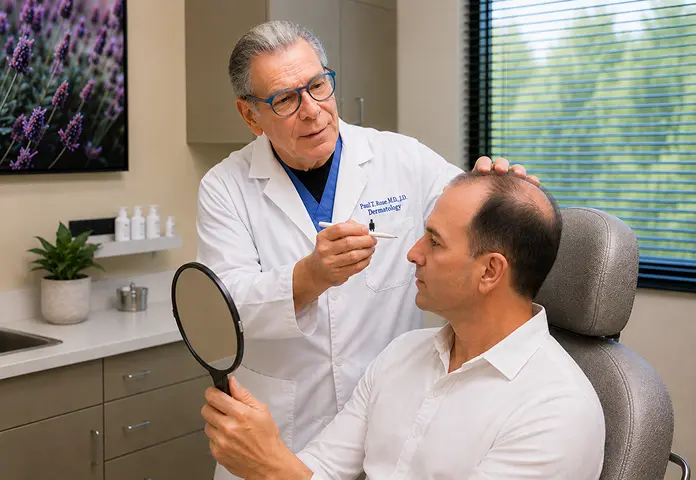
Step 01 — Consultation

What to Expect During Your Consultation

Your consultation is the foundation of a successful hair restoration outcome. During this in-depth, one-on-one session, Dr Rose will take the time to understand and address your unique concerns, examine your scalp and hair loss pattern up close, and build a treatment plan tailored specifically to you and your goals.

A thoughtful, one-on-one consultation to understand your concerns, evaluate your hair loss, and determine the most appropriate path forward.

A Thorough Evaluation

We’ll assess the extent and pattern of your hair loss, evaluate the quality and density of your donor area, and discuss any underlying factors such as genetics, hormones, or medical history that may be contributing to your hair loss.

Understanding Your Goals

Everyone’s reasons for seeking hair restoration are different. Whether you’re looking to restore a receding hairline, fill in thinning areas, or achieve a fuller, more natural look, we’ll listen closely to what matters most to you and set realistic expectations from the start.

Reviewing Your Options

We’ll walk you through the treatment approaches available including FUE, FUT, and non-surgical options like PRP or microneedling with biologics and explain the pros, cons, and expected results of each so you can make an informed decision.

Your Personalized Plan

By the end of your consultation, you’ll have a clear roadmap. A customized treatment recommendation, an estimated timeline, and transparent pricing with no pressure and no obligation. If your ready to take the first step, book your consultation today.

Your Hair Restoration Consultation

Every successful hair restoration journey begins with a careful consultation. This first appointment allows us to understand what you have been experiencing, evaluate the characteristics of your hair and scalp, and learn what you hope to achieve. Hair loss is different for every patient. Its cause, pattern, rate of progression, donor-hair availability, and potential response to treatment must all be considered before recommending a hair transplant or another form of therapy. Your consultation is therefore much more than a discussion about the number of grafts you may need. It is the foundation for making an informed and appropriate treatment decision.

Understanding Your Concerns and Goals

Your consultation begins with a one-on-one conversation about your hair loss and the changes you have noticed. You will have an opportunity to explain which areas concern you most, how your hair loss has progressed, and what you would like to accomplish through treatment. Your preferences are an important part of this discussion. Some patients want to rebuild a receding hairline, while others are concerned about thinning through the frontal region, crown, or multiple areas of the scalp. Understanding your priorities helps us evaluate which options may best align with your goals.

Step - 1

Step - 2

Reviewing Your Hair-Loss History

Next, we will review the history and progression of your hair loss. This may include discussing when you first began noticing hair loss and whether the changes have been gradual or sudden, areas where thinning or recession has progressed and any previous hair loss treatments or procedures you have undertaken. We will go over your family history of hair loss and review any relevant medical conditions, medications and prior and current health status. This information helps us to distinguish progressive pattern hair loss from other conditions that may require additional evaluation or treatment.

Evaluating Your Hair and Scalp

Your hair and scalp will be carefully examined to assess the location, pattern, and extent of your hair loss. The evaluation may include the density and caliber of your existing hair, the degree of miniaturization, scalp health, and the stability of the areas being considered for transplantation. If the pattern of hair loss is unusual or there are signs of an underlying scalp disorder, further diagnostic evaluation may be recommended before proceeding with surgery. Identifying the cause of hair loss is essential because not every type of hair loss should be treated with transplantation.

Step - 3

Step - 4

Assessing the Donor Area

For patients considering a hair transplant, the donor area must be evaluated carefully. This is the region located along the back and sides of the scalp rom which follicles are obtained for transplantation. We consider the density, quality, caliber, distribution, and long-term stability of the donor hair. Because donor follicles are limited, they must be used strategically. Careful donor assessment helps determine whether transplantation is appropriate and how the available hair can be allocated to create the greatest visual improvement while protecting future options.

Discussing Your Treatment Options

Once the evaluation is complete, we will discuss all the options that may be appropriate for you. Depending on your diagnosis, degree of hair loss, donor availability, and goals, recommendations may include Follicular unit extraction (FUE), Follicular unit transplantation (FUT), or a Combination FUT-FUE transplantation. We will let you know about medical or topical hair loss treatments to protect non transplanted surrounding hair and will tell you if hair transplantation is not advisable giving you the reasons behind that decision. When transplantation is considered, the differences between FUE and FUT will be explained, including how donor follicles are obtained, the type of healing involved, and why one approach may be more suitable for your particular needs.

Step - 5

Step - 6

Establishing Realistic Expectations

An important part of the consultation is understanding what treatment can reasonably accomplish. Hair restoration can create meaningful improvements in hairline structure, coverage, and the appearance of density, but results depend on the patient’s donor supply, existing hair, degree of loss, and individual healing and growth characteristics. We will discuss the areas that can be addressed, the approximate scope of treatment, and how future hair loss may affect long-term planning. The objective is not simply to treat the hair loss that is visible today, but to develop an approach that remains appropriate as you age.

Answering Your Questions

You will have time to ask questions about treatment options, recovery, expected growth, cost, and any other aspect of the process. We want you to understand both the possibilities and the limitations of treatment so that you can make a confident, well-informed decision.

Step - 7

Your Next Step

Following the consultation, the information gathered during your evaluation is used to develop a personalized plan. This plan brings together your diagnosis, hair characteristics, donor availability, aesthetic priorities, and long-term needs to determine the most appropriate course of treatment for you.